

 Danish

Updated: 07 september 2026
Published: 08 June 2021
Guide to correct assembly of ORFS (O-ring Face Seal) fittings
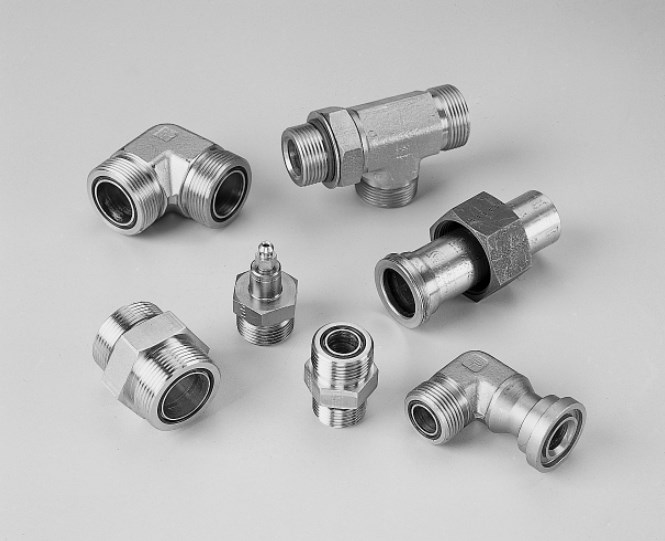
ORFS fittings (O-ring Face Seal) provide a robust, leak-free connection through a soft seal with a built-in O-ring. They are typically used in hydraulic systems with high pressure and vibration, where maximum tightness and operational reliability are essential.
In this guide we go through correct assembly, inspection and leak testing, so you achieve a tight and secure connection the first time.
Read more about ORFS fittings here.
What you need
For correct assembly we recommend the following:
- Torque wrench with the correct range.
- Two spanners/adjustable wrenches (backup + tightening).
- Cleaning wipes and clean, dry compressed air.
- Compatible O-ring (e.g. NBR or FKM depending on medium/temperature).
- Light, compatible assembly lubricant for the O-ring.
- Visual inspection of a flat, clean mating face free of scratches or burrs.
Step-by-step assembly
Step 1: Inspect the fitting and the O-ring
Start by checking that the O-ring is correctly seated in the groove and free of damage. It must be the correct size and in good condition. If the O-ring is missing or damaged, it must be replaced before assembly.
Step 2: Clean and align
Clean both the sealing face of the fitting and the mating face (tube, hose or port). The surfaces must be flat and free of dirt. Make sure the parts meet without tension or misalignment.
Step 3: Prepare the seal
Apply a thin film of compatible assembly lubricant to the O-ring. This reduces the risk of twisting or pinch damage during tightening.
Step 4: Hand-tighten
Assemble the parts and tighten the nut by hand until resistance is felt. Avoid twisting the hose or tube during assembly.
Step 5: Torque correctly
Hold the mating part with a wrench and tighten to the manufacturer's recommended torque values. See torque values in the Parker catalogue (section E31 O-Lok Assembly Instructions & F10 Triple-Lok/O-Lok Swivels). Correct torque is crucial. Both under- and over-tightening can cause leakage.
Step 6: Final check and leak test
Wipe all surfaces clean and pressurise the system gradually. Check for weeping or leakage at both operating pressure and any test pressure. Only re-tighten within the recommended torque range.
By following this guide for assembling ORFS fittings, you achieve a leak-free connection.
Common mistakes and quick troubleshooting
Leakage at first pressurisation
Often caused by dirt or a damaged O-ring. Disassemble, clean and replace the O-ring.
Extruded O-ring
Typically too high torque or the wrong material. Use the correct O-ring and torque.
Misaligned assembly or vibration
May be caused by a missing backup wrench or insufficient support of the tube/hose.
Repeated re-tightening
Normally not necessary with correct assembly. Check the calibration of the torque wrench and the sealing faces.
Maintenance and reassembly
When disassembling, the O-ring should always be replaced. Clean the sealing faces thoroughly and follow the assembly procedure again.
The inspection interval depends on pressure cycles, temperature and vibration, and should be part of the maintenance plan.
Safety first
Hydraulic systems operate under high pressure.
- Always relieve the pressure before working.
- Wear eye protection and gloves.
- Avoid contact with potential high-pressure spray.
Always follow the manufacturer's specifications for crimping and assembly.
Material and media compatibility
The choice of O-ring material depends on the medium and temperature:
- NBR is typically used for standard hydraulic oil
- FKM is chosen for higher temperatures or chemical exposure
Avoid lubricants that are not compatible with the O-ring or the medium.
See our range of ORFS fittings for tubes.
FAQ
Can I reuse the O-ring?
It is not recommended. Replace it every time you dismantle the connection.
Should I use sealing paste?
No. ORFS seals via the O-ring. Use only a thin film of compatible lubricant.
What if I don't know the torque?
Identify the fitting size and look up the correct tightening torque in the manufacturer's catalogue.
What does correct tightening look like?
The O-ring is slightly compressed, with no visible extrusion and no leakage under pressure.


