

 Danish


Updated: 13 October 2026
Published: 25 September 2019
Thread types: Guide to European, American and Japanese threads
An overview of BSP, metric DIN, NPT, JIC, ORFS, flange and JIS, and how to tell them apart
The most widely used thread types in hydraulics are BSP and metric DIN in Europe, NPT, JIC and ORFS in North America, and JIS in Japan. You tell them apart by the thread angle, by whether the thread is parallel or tapered, and by how the fitting seals: with a cone, an o-ring, a flare or in the thread itself.
What is the difference between the most widely used thread types?
Overview: The table shows the key characteristics. You will find details, standards and Parker end configurations further down.
| Thread type | Region | Thread | Sealing |
|---|---|---|---|
| BSPP (G thread) | Europe | Parallel, 55° thread angle | 60° cone, o-ring or flat gasket |
| BSPT (R thread) | Europe | Tapered, 55° thread angle | In the thread |
| Metric DIN 24° | Europe | Metric parallel (M) | 24° cone, optionally with o-ring |
| French gas | France | Metric | 24° cone, metal to metal |
| NPT/NPTF | USA | Tapered, 60° thread angle | In the thread |
| JIC 37° | USA | UNF, parallel | 37° flare, metal to metal |
| SAE 45° | USA | Parallel | 45° flare, metal to metal |
| ORFS | USA | Parallel | Flat face with o-ring |
| Flange | Worldwide | 4 bolts (ISO 6162) | O-ring in the flange face |
| JIS | Japan | BSPP or metric | 30° cone |
How do you find out which thread you have?
Identification: Measure the thread's outside diameter and pitch, and check whether the thread is parallel or tapered. Then measure the angle of the sealing surface. With these three pieces of information you can find the thread type in the table above and in the sections below.
Find fittings with BSP threads in our webshop:
Crimp fittings, one piece Crimp fittings, two piece
Which European thread types are there?
What is a BSP thread?
BSP (British Standard Pipe) is a British pipe thread standard which, together with metric threads, is the most widespread in Europe. BSP is also known as the Whitworth thread and comes in two types: BSPP (British Standard Pipe Parallel), which is parallel, and BSPT (British Standard Pipe Tapered), which is tapered.
Thread angle and sealing: BSP has a thread angle (flank angle) of 55°. BSPP typically seals with a 60° cone, an O-ring or a flat gasket, while BSPT seals in the thread itself.

Measuring thread pitch – number of threads per inch.
Pitch: On BSP threads the pitch is measured as the number of threads per inch (TPI). This applies to all thread types in this guide except metric threads, where the pitch is measured in millimetres.
What is a BSPP thread?
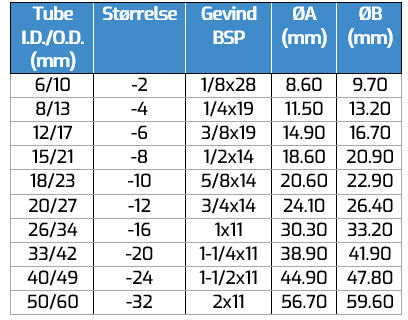
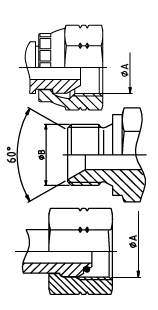
BSPP is a parallel BSP thread, also known as a G thread. BSPP male fittings often have a 60° cone or an O-ring for sealing.
How BSPP connects: A BSPP male can be connected to a BSPP female, but not to a female with a swivel and not to a BSPT female.
BSPP, metal to metal without O-ring
Standard: BS5200, ISO 8434-6
Parker end configuration: 92, B1, B2, B4, D9
BSPP, metal to metal with O-ring
Standard: ISO 12151-6, ISO 8434-6
Parker end configuration: EA, EB, EC, EE, D9
What is a BSPT thread?
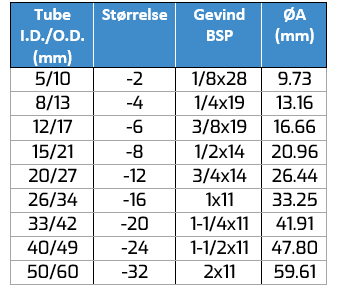
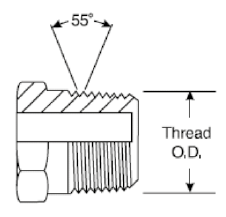
BSPT is a tapered BSP thread, also known as an R thread. It seals in the thread itself when it is screwed together.
BSPT or NPT? BSPT is easily confused with NPT, because both are tapered. Measure the thread angle with a thread gauge: BSPT is 55° and NPT is 60°.
How BSPT connects: A BSPT male can be connected to both a BSPT female and a BSPP female.
Parker end configuration: 91
What is BSP flat seal?
BSP flat seal is fittings with a parallel BSP thread and a flat sealing surface. The seal is created when a composite gasket is pressed against the face of the female fitting.
Parker end configuration: B5, B6, B7
What is a metric thread?
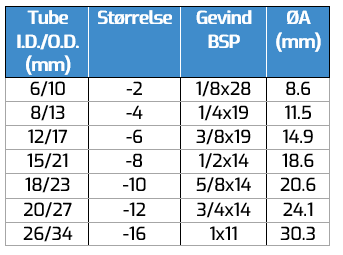
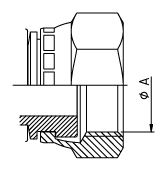
Metric threads are designated with an M followed by the outside diameter and the pitch in millimetres, e.g. M22 x 1.5. Together with BSP, metric threads are the most widespread in Europe and come as both parallel and tapered threads.
Pitch in millimetres: What sets metric threads apart from the other thread types is that the pitch is measured as the distance between two threads in millimetres and not as the number of threads per inch. M10 x 1.5 therefore means an outside diameter of 10 mm and 1.5 mm between the threads. In industry, the most common pitches are 1, 1.5 and 2 mm.
Standards: Metric fittings often follow international standards from DIN (Deutsches Institut für Normung) or ISO (International Organization for Standardization).
Parallel or tapered? Tapered metric threads resemble NPT and are mostly seen in low-pressure applications, but are not widely used today. Parallel metric threads, on the other hand, are very common, for example in Parker's EO2 fitting series.

Measuring thread pitch on a metric thread.
What are DIN metric fittings?
DIN fittings are metric fittings that seal with an angled sealing surface (metal to metal) or with a combination of metal to metal and an O-ring. They come in the super-light (LL), light (L) and heavy (S) series.
Sealing angle: The sealing surface is either 24° with or without an O-ring or a combined 24°/60° cone. You identify the fitting by measuring the thread size and the outside diameter of the tube.
DIN, super-light series (LL)
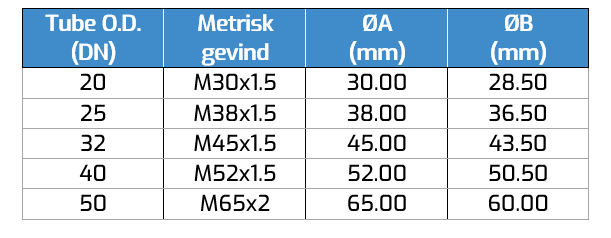
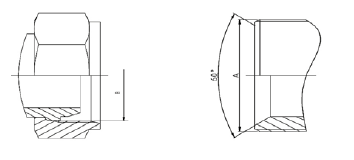
A male with a 60° cone only fits a female with a 60° cone. Both male and female have a parallel metric thread.
Standard: DIN 20078 part 3
Parker end configuration: C0
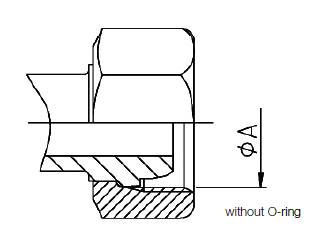
DIN, light and heavy series without o-ring
This fitting is often called a "ball nose cone" and is not used much today. Instead, DIN 24° light or heavy series with o-ring is typically used.
A male with a 60° cone fits a female with a 24° or 60° cone. The male has a 60° cone, and the female has both a 24° and a 60° cone. Both have parallel metric threads.
Standard: DIN 20078 part 2
Parker end configuration: C3, C4, C5, C6
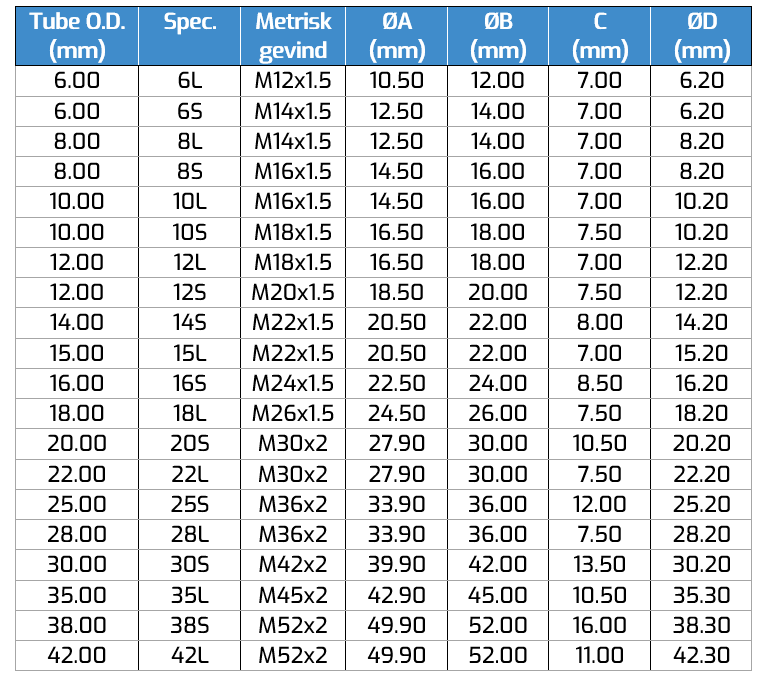
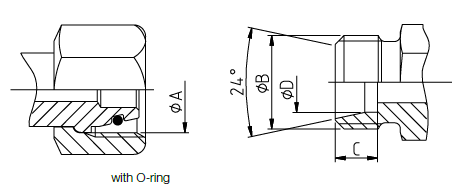
DIN 24°, light and heavy series with o-ring
The male has a 24° cone and parallel metric threads. The female has a 24° convex cone with o-ring and a swivel nut with parallel metric threads.
Standard: ISO 12151-2, ISO 8434-1, ISO 8434-4
Parker end configuration for light series: CA, CE, CF, D0
Parker end configuration for heavy series: C9, 0C, 1C, D2
What are French gas fittings?
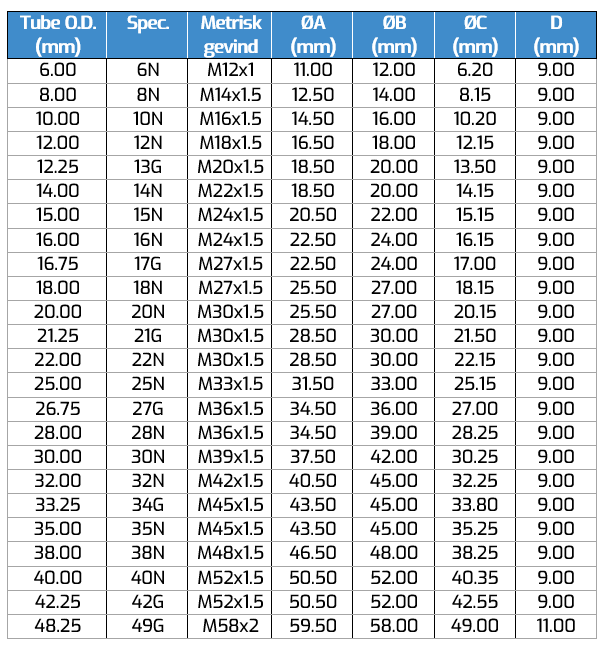
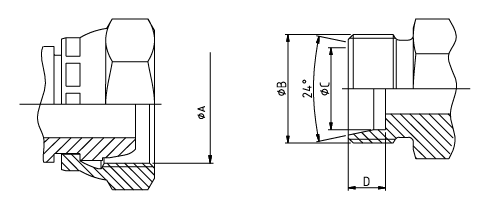
French gas fittings are typical of the French market and have a 24° cone with parallel metric threads. They resemble German DIN fittings, but the thread differs in some sizes, because French gas threads come in all sizes, whereas DIN fittings use standard thread sizes.
French metric 24° cone
Sealing: Metal to metal. The fittings are not specified in international standards.
Metric tube Parker end configuration: F6, F9
Gas tube Parker end configuration: FG, F2, F4
Which American thread types are there?
What are NPT and NPTF threads?
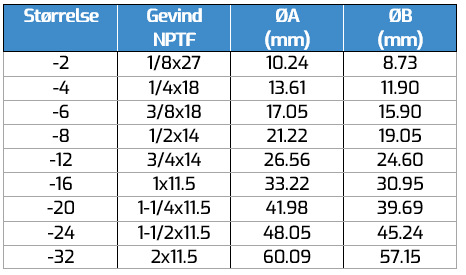
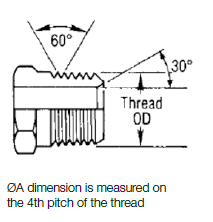
NPT (National Pipe Taper) and NPTF (National Pipe Taper Fuel, also called Dryseal) are tapered thread types that are most widespread in the USA and are therefore found on many machines of American origin. Because the thread is tapered, it seals more tightly the harder it is screwed together.
The difference between NPT and NPTF: The two look alike, but small differences in dimensions mean that NPTF seals better than NPT. That is why NPTF is the most widely used today. If you come across an NPT thread, we recommend using PTFE tape to improve the seal.
Application: NPT and NPTF are recommended for permanent connections that will not be taken apart. The thread deforms when it is tightened, and that is what creates the seal. The fittings have a 30° sealing face and a 60° concave cone.
Beware of mix-ups: NPTF and BSPT are easily confused. The difference is the thread angle: 60° on NPTF and 55° on BSPT. An NPT male can also be screwed into a BSPT female, but the connection will not be tight.
NPTF
An NPTF male fits an NPTF, NPSF or NPSM female.
Standard: SAE J516
Parker end configuration: 01
What are JIC fittings?
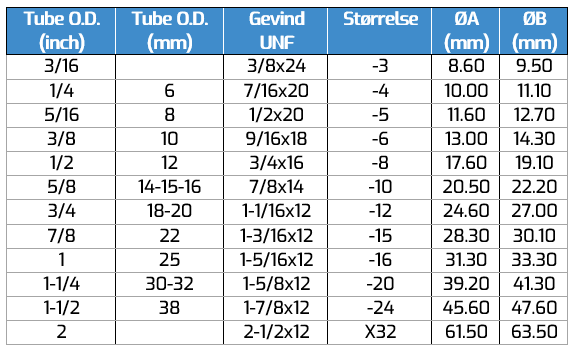
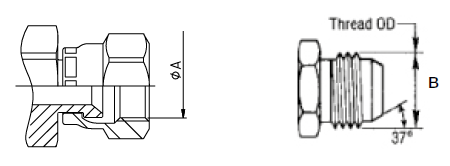
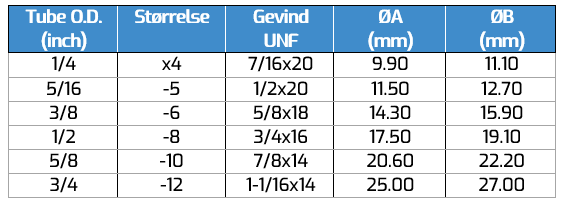
JIC (Joint Industry Council), also called SAE JIC 37°, are fittings with metal-to-metal sealing, a 37° flare and parallel UNF threads (Unified National Fine). The standard originally comes from SAE (Society of Automotive Engineers) and is described today in SAE J514.
Prevalence: JIC is the most common American fitting type in Europe. Parker JIC hose fittings are fully compatible with Parker Triple-Lok tube fittings and adapters.
Standard: ISO 12151-5, ISO 8434-2, SAE J516
Parker end configuration: 03, 06/68, 37/3V, 39/3W, 41/3Y, L9
What are SAE 45° flare fittings?
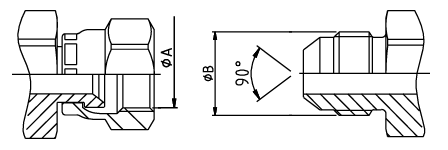
SAE 45° flare are metal-to-metal fittings named after their flare angle. The female fitting has a 90° concave cone formed by a 45° angle.
How they fit together: An SAE 45° male only fits an SAE 45° female or a female with a dual seat for both JIC 37° and SAE 45°. JIC 37° and SAE 45° have the same thread in several sizes, but cannot be used together.
Standard: SAE J516
Parker end configuration: 04, 08/68, 37/3V, 39/3W, 41/3Y
What are ISO 11926 fittings?
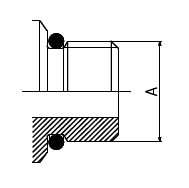
ISO 11926 is a male fitting with parallel threads, a sealing face and an o-ring, also known as SAE O-ring boss (ORB). It fits boss-type female ports, which are used in ports on machines. Sealing takes place between the o-ring on the male fitting and the sealing face in the port.
Parker end configuration: 05
What are ORFS fittings?
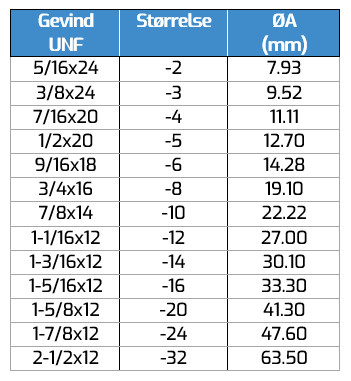
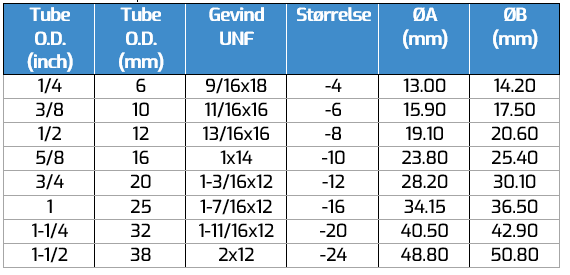
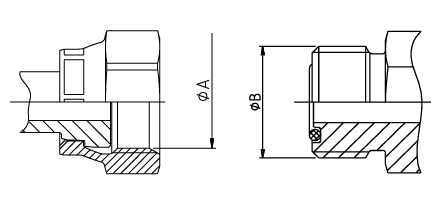
ORFS (O-ring face seal) are fittings with a flat sealing face, where an o-ring in a groove on the male fitting is pressed against the face of the female fitting. They are among the most widespread fitting types among global OEMs, because they seal very well and withstand vibration.
Standard: ISO 12151-1, ISO 8434-3, SAE J516
Parker end configuration: JC, JM/J0, JS, JU, J1, J3, J5, J7, J9
What are flange fittings?
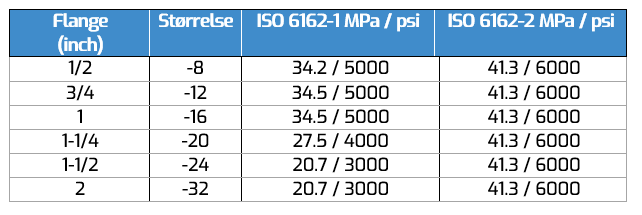
4-bolt flange fittings (split or full flange) are used all over the world to connect high-pressure hoses, typically on pumps, motors and cylinders where the hose assembly is exposed to heavy pressure loads.
Two pressure classes:
- ISO 6162-1 (SAE J518 Code 61): max. working pressure of 3000 to 5000 psi depending on the size.
- ISO 6162-2 (SAE J518 Code 62): max. working pressure of 6000 psi.
The flanges are also available in customer-specific versions for Komatsu® and Caterpillar®.
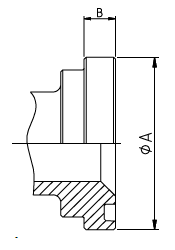
ISO 6162-1, 21.0 MPa (3000 psi)
Parker end configuration (3000 psi): 15, 16, 17, 19, P5, P7, P9
Parker end configuration (5000 psi): 4A, 4F, 4N
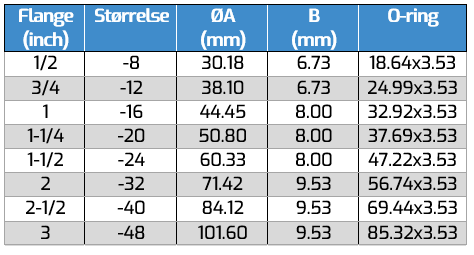
ISO 6162-2, 42.0 MPa (6000 psi)
Parker end configuration: 6A, 6F, 6N, PA, PF, PN, 89
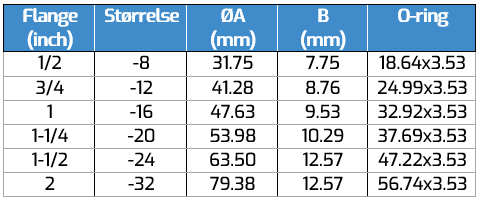
Caterpillar
Parker end configuration: XA, XF, XG, XN
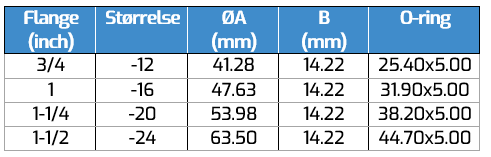
Komatsu
The Komatsu flange is not available in SAE or ISO standard sizes, only in size -10 (5/8"), but it is still very widely used.

What is a 4-bolt split flange?
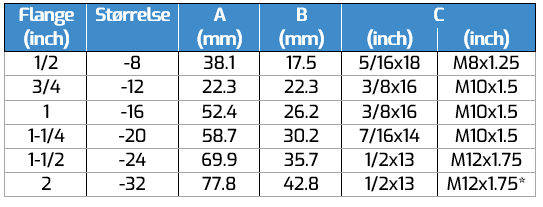
A 4-bolt split flange is used to connect flange fittings to the port on the pump, motor or cylinder.
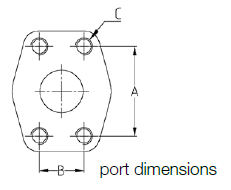
ISO 6162-1, 21.0 MPa (3000 psi)
ISO 6162-1 covers a maximum of 21.0 MPa (3000 psi) to 35.0 MPa (5000 psi) depending on the size.
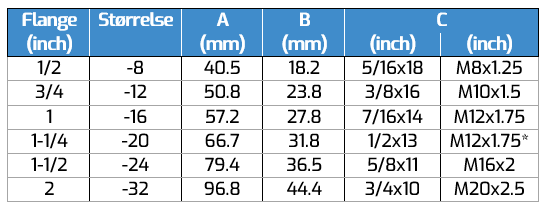
ISO 6162-2, 42.0 MPa (6000 psi)
ISO 6162-2 is the high-pressure class for a maximum of 42.0 MPa (6000 psi).
Which Japanese thread types are there?
What are JIS fittings?
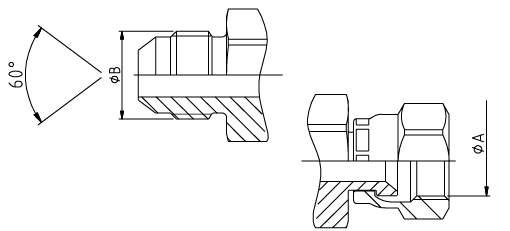
JIS (Japanese Industrial Standard) fittings are found on most Japanese equipment. They have a 30° cone and either BSPP or metric threads.
Watch out for mix-ups: JIS fittings are easily confused with BSP and JIC fittings because they look alike. Check the cone angle: JIS has 30°, and JIC has 37°.
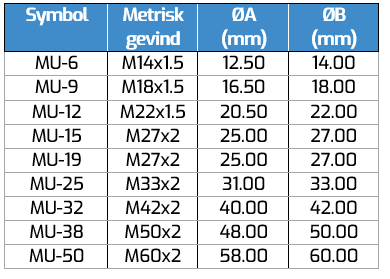
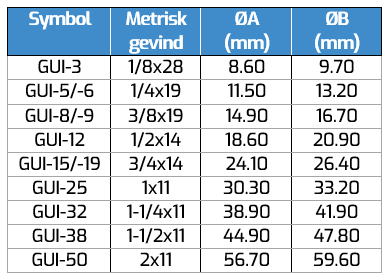
Frequently asked questions (FAQ)
How do I tell BSPT and NPT apart? Measure the thread angle with a thread gauge. BSPT has 55°, while NPT has 60°. The threads may well engage with each other, but they will not seal.
Are BSPP and G threads the same? Yes. BSPP is also called G thread, and BSPT is called R thread.
Can JIC and JIS fittings be used together? No. JIC has a 37° flare and UNF threads, while JIS has a 30° cone and BSPP or metric threads.
What is the difference between JIC and SAE 45°? JIC has a 37° flare, and SAE 45° has a 45° flare. They have the same threads in several sizes, but cannot be used together.
What does M22 x 1.5 mean? The thread has an outside diameter of 22 mm, and there is 1.5 mm between the threads.
How do I find out which thread I have? Use our guide and thread identification chart to identify the thread type and sealing form.
Do you have questions about thread types? Call +45 63 12 83 00 or write to ps@hymatik.com. Our hydraulics specialists will be happy to help you.


