

 Danish

Denison Hydraulic
Denison Hydraulic is a well-known Parker brand within hydraulic pumps, hydraulic motors and selected valve solutions. The brand was founded in 1900 and is today part of Parker Hannifin, where Denison is particularly associated with robust pump solutions for demanding operation.
Known for reliable hydraulics in tough environments
Historically, Denison has held a strong position in applications with high reliability requirements, including military systems. Today, Denison components are used widely in industry, mobile machinery and trucks, where stable performance and long service life are often more important than the absolute lowest purchase price.

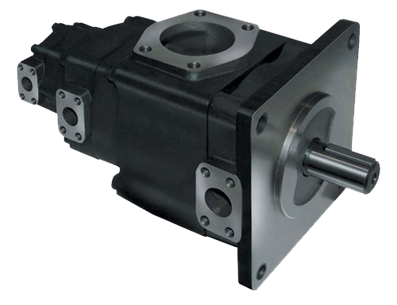
Product range: vane and piston technology
Denison is particularly known for vane pumps and hydraulic motors that can run at pressures above 4,500 psi (approx. 310 bar). In addition, the range also includes axial piston pumps, where selected series are specified for up to 7,250 psi (approx. 500 bar).
In practice, this means that Denison is often chosen when you need:
- Stable flow and consistent motion control.
- High performance in compact installations.
- A focus on lower noise levels and better operating comfort.
- Flexibility in configuration, so the pump can be adapted to system requirements.
What to clarify before you choose a component
To select the right Denison solution, it usually pays off most to start with operating data and system requirements — not just the model name.
Consider, for example:
- Pressure level and duty cycle: continuous pressure, peak pressure and how often the system is loaded.
- Noise level: particularly relevant in industrial environments, test benches and installations close to operators.
- Oil, temperature and cleanliness: fluid selection and filtration have a major impact on service life.
- Space and mounting: shaft, flange, direction of rotation and connections must fit mechanically.
Related knowledge and next steps
If you work with design, replacement or troubleshooting, it can be relevant to compare pump principles (vane vs. piston) and look at the overall efficiency of the system — for example in relation to valves, filtration and correct sizing.
If you need to match an existing pump or motor, it is an advantage to have the nameplate details ready along with data for pressure, flow and speed, so the specification can be verified.


